




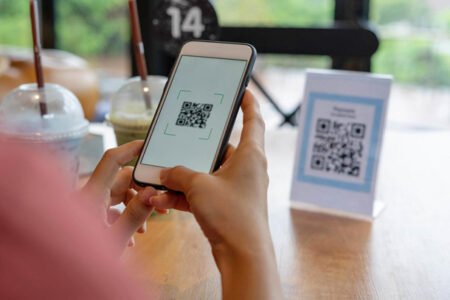
QR codes make connections effortless.
QR codes have become one of those quiet little tools that make everyday life easier.
You see them taped to café counters, printed on flyers, tucked into menus, and shared in group chats. They’re simple, they’re fast, and they bridge the gap between the physical world and the digital one with almost no friction.
At their core, QR codes are about access, getting people to the information they need without making them type, search, or navigate. Whether you’re sharing an event link, a menu, a payment page, or a document, a QR code removes the steps that usually trip people up. You point your phone, tap once, and you’re there.
That ease is the reason so many community groups, small businesses, artists, and organizers rely on them. They make digital connection feel effortless.
Where QR Codes Came From
QR codes didn’t start in marketing or design studios, they were born on a Toyota factory floor in Japan. In the early 1990s, engineers at Denso Wave were struggling with the limits of traditional barcodes. A standard barcode could only hold about 20 characters, which meant workers had to scan multiple labels just to track a single auto part. It slowed everything down.
Masahiro Hara, the lead engineer, wanted something faster and more flexible. His team began developing a new kind of code in 1992, and by 1994 they released what we now know as the QR code.
The design was inspired by the board game Go. The contrast of black and white stones arranged on a grid sparked the idea for a two‑dimensional pattern that could be read quickly from any angle.
A few key innovations made QR codes revolutionary:
- They could store thousands of characters instead of a few dozen.
- They could be scanned in under a second — hence “Quick Response.”
- They included error correction, meaning they still worked even if part of the code was smudged or damaged.
And then came the decision that changed everything: Denso Wave chose not to enforce its patent. They made the QR code an open standard, allowing anyone to use it freely. That openness is a big part of why QR codes spread across the world.
How QR Codes Became Everyday Tools
For a long time, QR codes were mostly used in Japan — on train tickets, product packaging, and manufacturing lines. The rest of the world didn’t catch on until smartphones became powerful enough to scan them easily.
The real turning point came in the 2010s, when phones began including native QR scanning in their cameras. Suddenly, you didn’t need a special app. You just pointed your phone and it worked. Adoption skyrocketed.
Then the pandemic arrived, and QR codes became part of daily life. Restaurants used them for contactless menus. Stores used them for payments. Organizations used them to share information without physical touchpoints. In 2022, 89 million people in the US scanned a QR code, a 26% jump from 2020.
Today, QR codes are everywhere:
- Payments
- Event check‑ins
- Product information
- Digital menus
- Community flyers
- Business cards
- Public art and storytelling projects
They’ve become a universal language for “here’s the thing you’re looking for.”
Why You Might Want to Use One
If you’re sharing information with neighbors, customers, readers, or attendees, QR codes make the process smoother. They’re especially helpful when:
- You want people to access something quickly.
- You don’t want to rely on long URLs.
- You’re printing materials and need a digital bridge.
- You’re sharing documents, menus, or sign‑up forms.
- You want to make your content accessible to people who aren’t tech‑savvy.
QR codes remove friction. They make your information easier to reach, and in a world full of distractions, that matters.
Online Links? Use a Button Instead of a QR Code
If you are working on a website or a newsletter, there is no need to add a QR code. Instead, create a button.
Adding a clickable button with a link is simpler and faster than scanning a QR code. Buttons are instantly recognizable as links, making the user experience smoother and more direct. When you want to guide people online, a button is an easy, accessible choice that works instantly, no scanning needed.